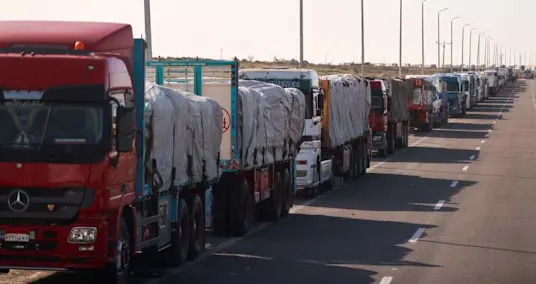
Two IDF officers and a civilian face indictments for smuggling contraband into Gaza using humanitarian aid trucks, part of a growing wartime smuggling investigation.
Military and civilian prosecutors on Tuesday filed prosecutors’ declarations ahead of indictments against two IDF officers and a civilian suspected of exploiting humanitarian aid trucks to smuggle prohibited goods into the Gaza Strip for profit, in the latest in a growing wartime cluster of Gaza-smuggling cases. According to the joint statement by the Shin Bet (Israel Security Agency), Israel Police, and the IDF, the suspects are accused of trying to move contraband into Gaza in exchange for hundreds of thousands of shekels.
Investigators allege that Nasser Abu Mustafa, a resident of Rahat, used his ties to an IDF reservist officer to examine the possibility of carrying out smuggling operations into the enclave. After the two allegedly formulated the plan, the reservist is suspected of bringing in a second officer.
IDF officers exploited their military positions
Authorities say the officers exploited their military positions and access to information about aid convoys, while Abu Mustafa hid the prohibited goods inside trucks that had broken down on the way to Gaza after arriving under the guise of repairing them. The contraband allegedly included hundreds of thousands of cigarettes and several cellular devices. Prosecutors said indictments are expected to be filed soon.
The case adds to an expanding body of wartime prosecutions centered on the movement of goods into Gaza. In February, prosecutors filed indictments against 12 Israelis accused of helping smuggle millions of shekels’ worth of goods into the Strip during the war, including cigarettes, mobile phones, batteries, vehicle parts, communication cables and electrical equipment, in a scheme prosecutors said strengthened Hamas economically.
In March, prosecutors filed another indictment against four defendants accused of repeatedly attempting to move prohibited goods into Gaza outside the authorized inspection and transfer mechanism, including cigarettes, cellphones, solar panels, batteries, generators, and computers.

This affair, based on the material now public, does not appear to be part of the recent Iran-linked espionage investigations.
Still, it emerges against a broader wartime backdrop in which Israeli security agencies have been dealing at once with two separate patterns: internal smuggling cases involving alleged profiteering through Gaza supply routes, and a distinct wave of Iran-linked espionage probes involving Israelis suspected of carrying out tasks for Iranian actors. Just this week, limited publication was allowed in a separate security case involving suspects alleged to have provided services to Iranian elements, including suspected work connected to explosive material.
LATEST POSTS
- 1
 What exactly is the Upside Down in 'Stranger Things'? The wormhole revelation, explained.
 - 2Two more UN peacekeepers killed in southern Lebanon: UNIFIL
- 3Interpreter Starts Sobbing as 11-Year-Old Testifies About Last Time He Saw His Mom Before She Was Killed in Missile Strike
- 4Science is best communicated through identity and culture – how researchers are ensuring STEM serves their communities
- 5Agios Pharma shares jump as US FDA expands approval for its blood disorder drug



- Web designers for Independent ventures
- Nine in 10 German industrial firms expect Iran war to hit business
- Gilead's new HIV prevention shot added to CVS's drug coverage lists, CEO says
- Great DSLR Cameras for Photography Devotees
- Fact Check: Israeli Channel 13, Al Jazeera Did NOT Confirm Hezbollah Captured All Or Part Of Kiryat Shmona
- ‘Extraordinary’ Iron Age war trumpet uncovered in England
- Pocket-Accommodating Jeep Wrangler Buying Guide for Seniors
- Canada Awards C$1.5 Billion Defense Contracts to L3Harris, Airbus
- New India programme supports tribal families hosting tourists