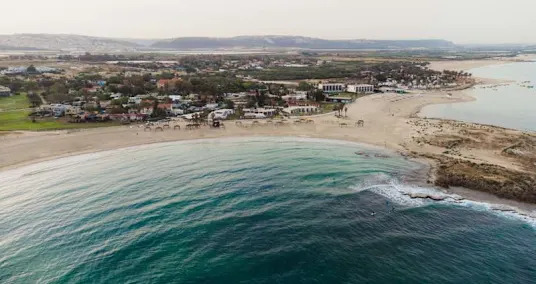
The discovery was made in an ancient shipwreck in the Dor Lagoon near the Carmel Coast, where archaeologists recovered nine pieces of unprocessed iron known as “blooms.”
Researchers from the University of Haifa said Wednesday that an underwater excavation off Israel’s northern Mediterranean coast uncovered what they described as the earliest known cargo of raw iron transported by ship, dating back around 2,600 years, Xinhua reported.
The discovery was made in an ancient shipwreck in the Dor Lagoon near the Carmel Coast, where archaeologists recovered nine pieces of unprocessed iron known as “blooms.” According to the university, the find provides direct evidence of how iron was transported in its earliest commercial stages.
The material was preserved in its original form, having solidified directly in a smelting furnace without undergoing forging or further refinement. Researchers said this distinguishes the cargo from later iron artifacts that typically show signs of shaping or tool-making.
Unlike copper and bronze, which could be melted into liquid form in ancient production processes, iron was heated with charcoal to produce a solid, porous mass. That mass was generally hammered to remove impurities and create denser material suitable for tools and implements.
The recovered blooms showed no indication of that secondary processing stage, suggesting they were transported immediately after production.

Earliest iron shipment discovered in ancient Mediterranean wreck
To determine the age and condition of the cargo, researchers conducted microscopic and chemical analyses.
Radiocarbon dating was also carried out on charred wood embedded in one of the pieces, helping confirm the timeline of the shipment. The findings were published in the journal Heritage Science.
Researchers said the cargo indicates that iron was being moved in raw form from production sites to other locations for further processing, pointing to a level of specialization in ancient manufacturing and trade networks in the Mediterranean.
The University of Haifa said the discovery provides new insight into early iron production and distribution practices in the region.
LATEST POSTS
- 1
 NASA astronauts to return from space early due to an 'unexpected medical issue.' What happened — and when are they coming home?
 - 212 times rockets and spacecraft crashed and burned in 2025
- 3How color-changing, bacteria-infused spacesuits could help keep future astronauts safe from space radiation
- 4Pocket-Accommodating Jeep Wrangler Buying Guide for Seniors
- 5Extraordinary Snowboarding Objections All over the Planet


- Manual for Tracking down the Mysterious Cascades in China
- Private sector revives the climate disaster database Trump tried to squash
- Wonderful Sea shores All over the Planet
- NASA's Artemis 2 moon launch may be visible from Florida and southern Georgia today. Here's when to look
- Poland open to German troops to help secure Ukraine ceasefire
- Watch Rocket Lab launch Japanese technology-demonstrating satellite to orbit tonight
- Novo Nordisk justifies reasoning behind failed GLP-1 Alzheimer's trials
- General Atlantic says ‘biggest mistake’ would be pulling back on Gulf deals
- 2024's Savvy Home Gadgets for an Associated Way of life